
Early Changes, No Symptoms
Many people can have diabetic retinal changes while their vision still feels normal.
Ask about retina screening →Diabetes can affect the retina before vision noticeably changes. SGVEH supports diabetic retina screening, OCT and fundus evaluation, treatment planning for diabetic macular edema and advanced retinopathy, plus structured follow-up with retina specialists.
High blood sugar over time can affect the small blood vessels of the retina. The condition can range from early diabetic retinal changes to diabetic macular edema and advanced proliferative diabetic retinopathy.
Many people can have diabetic retinal changes while their vision still feels normal.
Ask about retina screening →Fluid leakage into the macula can cause diabetic macular edema and affect reading or fine vision.
See imaging support →New floaters, cobweb-like shadows or dark spots can occur when abnormal retinal vessels bleed.
See warning signs →Bleeding and abnormal vessel growth may occur in more advanced diabetic retinopathy.
See treatment options →Swelling at the macula can reduce central vision and may need injection-based treatment.
Meet retina specialists →Scar tissue, recurrent bleeding or traction can create more complex vitreoretinal problems.
Need specialist guidance? →Disease severity can differ between eyes, so both eyes need proper retinal assessment.
See care journey →Diabetic retinopathy care often requires repeat retinal review even after treatment.
Read FAQs →Because diabetic retinopathy is a retina condition, SGVEH's retina specialists are placed first. The wider ophthalmology team supports comprehensive evaluation, associated eye conditions and coordinated long-term care.

Ophthalmologist • Retina Specialist
Medical and surgical retina, including diabetic retinopathy, diabetic macular edema and advanced retina care.

Ophthalmologist • Retina Specialist
Retina, uvea and vitreoretinal care with support for diabetic retinal disease and complex retina conditions.

Ophthalmologist
Strategic leadership, hospital systems and comprehensive eye care support.

MBBS, MS (AIIMS New Delhi)
Cataract, refractive care, glaucoma and neuro-ophthalmology with comprehensive specialist coordination.

Ophthalmologist
Comprehensive ophthalmology and patient care with coordinated follow-up support.

Ophthalmologist
Comprehensive ophthalmology and patient care support.

Ophthalmologist
Comprehensive ophthalmology and clinical care within the SGVEH network.

Ophthalmologist
Holistic eye care, community ophthalmology and institutional direction.

MBBS, DOMS; advanced cornea training
Cornea, keratoconus, ocular surface and corneal transplant support when broader eye evaluation is needed.

Ophthalmologist
Children's eye care, amblyopia and squint care within the wider SGVEH system.

MBBS, MS, FACS; fellowship training
Oculoplasty, ptosis, DCR, orbit and eyelid reconstruction within SGVEH's multispecialty network.
The right diabetic retinopathy treatment depends on disease stage, macular involvement, retinal bleeding, imaging findings and an in-person retina examination.
Not every patient needs the same treatment. Examination and imaging help decide whether monitoring, injections, laser or surgery is appropriate.
The specialist assesses whether changes are mild, moderate, severe or proliferative.
OCT helps identify diabetic macular edema that may affect central vision.
Bleeding can indicate more active or advanced diabetic retinal disease.
New vessel growth can raise the risk of bleeding and traction-related complications.
Treatment is chosen according to macular edema, vessel activity and the overall retina picture.
Advanced bleeding, traction or retinal detachment may require vitreoretinal surgical evaluation.
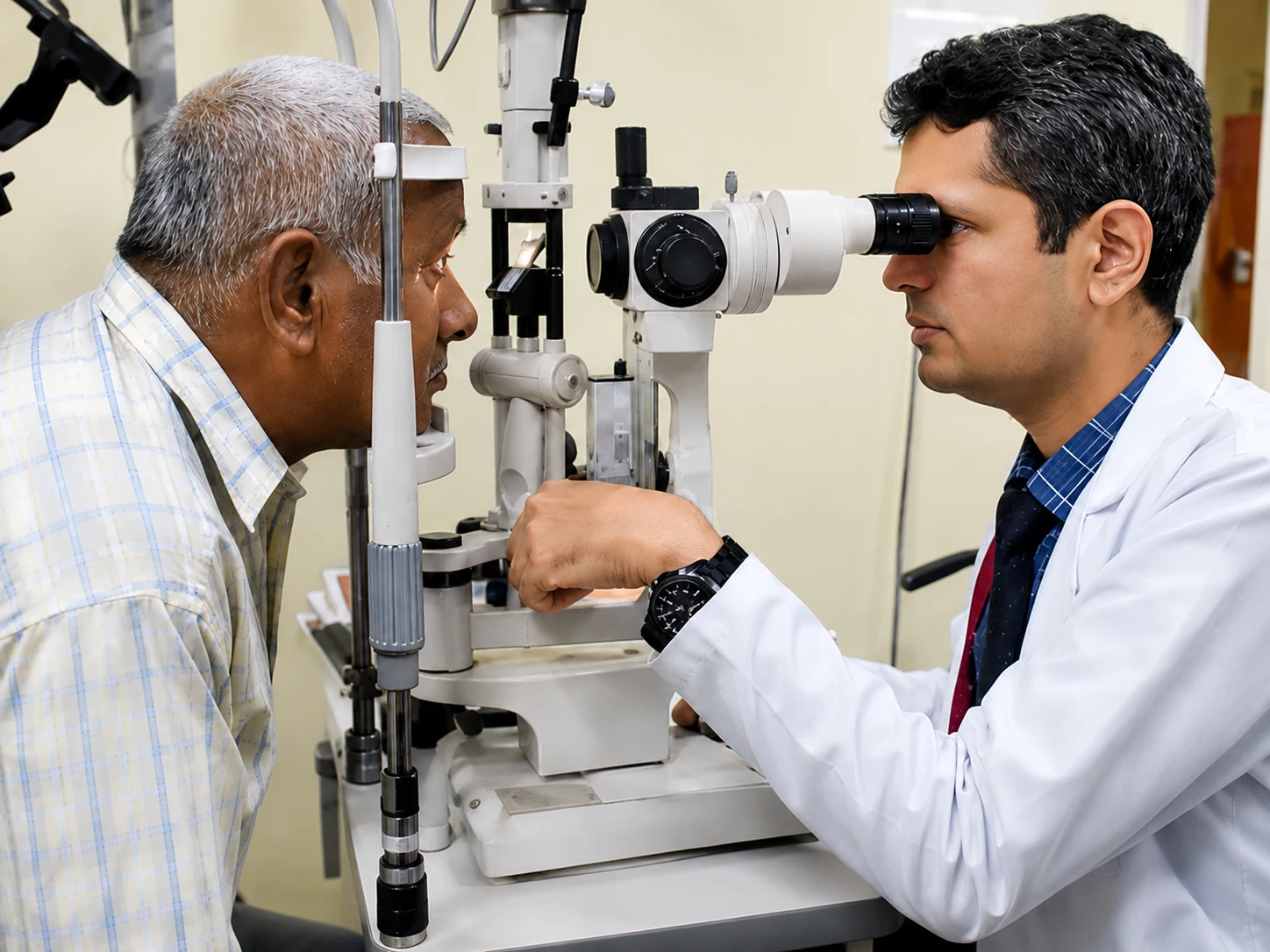
A structured pathway helps patients understand what is happening and why treatment or follow-up is being recommended.
Review diabetes history, visual symptoms and previous retinal treatment or reports.
Perform retinal examination and use OCT / fundus imaging according to clinical need.
Decide whether monitoring, injections, retinal laser or vitreoretinal surgery should be discussed.
Schedule follow-up to track macular swelling, bleeding, vessel changes and visual response.
The exact plan depends on retinal findings. Treatment suitability can only be decided after examination and imaging.
Early retinal changes may be followed closely while diabetes and other systemic risk factors are managed.
Intravitreal treatment may be recommended for diabetic macular edema or selected active retinal changes.
Laser may be used in selected diabetic retinal disease, particularly when abnormal new vessels create risk.
Advanced bleeding, traction or retinal detachment may require vitreoretinal surgical treatment.
OCT can help assess macular swelling, while fundus imaging documents retinal bleeding, exudates and other diabetic changes. Additional tests may be advised when clinically indicated.
Simple answers to common questions patients ask before a diabetic retina consultation.
Need personalised retina guidance? →Yes. Treatment depends on the stage and may include monitoring, eye injections, retinal laser or surgery. Good diabetes control and regular follow-up remain important.
No. Some early cases are monitored. Treatment is more likely when there is macular edema, active abnormal vessels, bleeding or advanced retinal disease.
It is swelling at the macula caused by leakage from diabetic retinal blood vessels. It can affect central vision and may need retina treatment.
A dilated retinal examination, OCT and fundus imaging are commonly used. Additional testing may be advised based on the retinal findings.
Some patients improve, while in others the main goal is to control disease and reduce further vision loss. Outcome depends on the stage and the amount of retinal damage already present.
Yes. Diabetic retinal disease can change over time, and follow-up helps assess treatment response and decide whether additional care is needed.
This page is educational. Diabetic retinopathy treatment depends on retinal examination, imaging, disease stage, macular involvement and the treating retina specialist's judgement. Not every patient needs the same treatment.
Our team can guide you toward an appropriate diabetic retina evaluation at SGVEH Raipur based on your symptoms, diabetes history and previous reports.